

Connect Teetrack to ChatGPT or Gemini CLI
By Tristan Doehl · · Updated
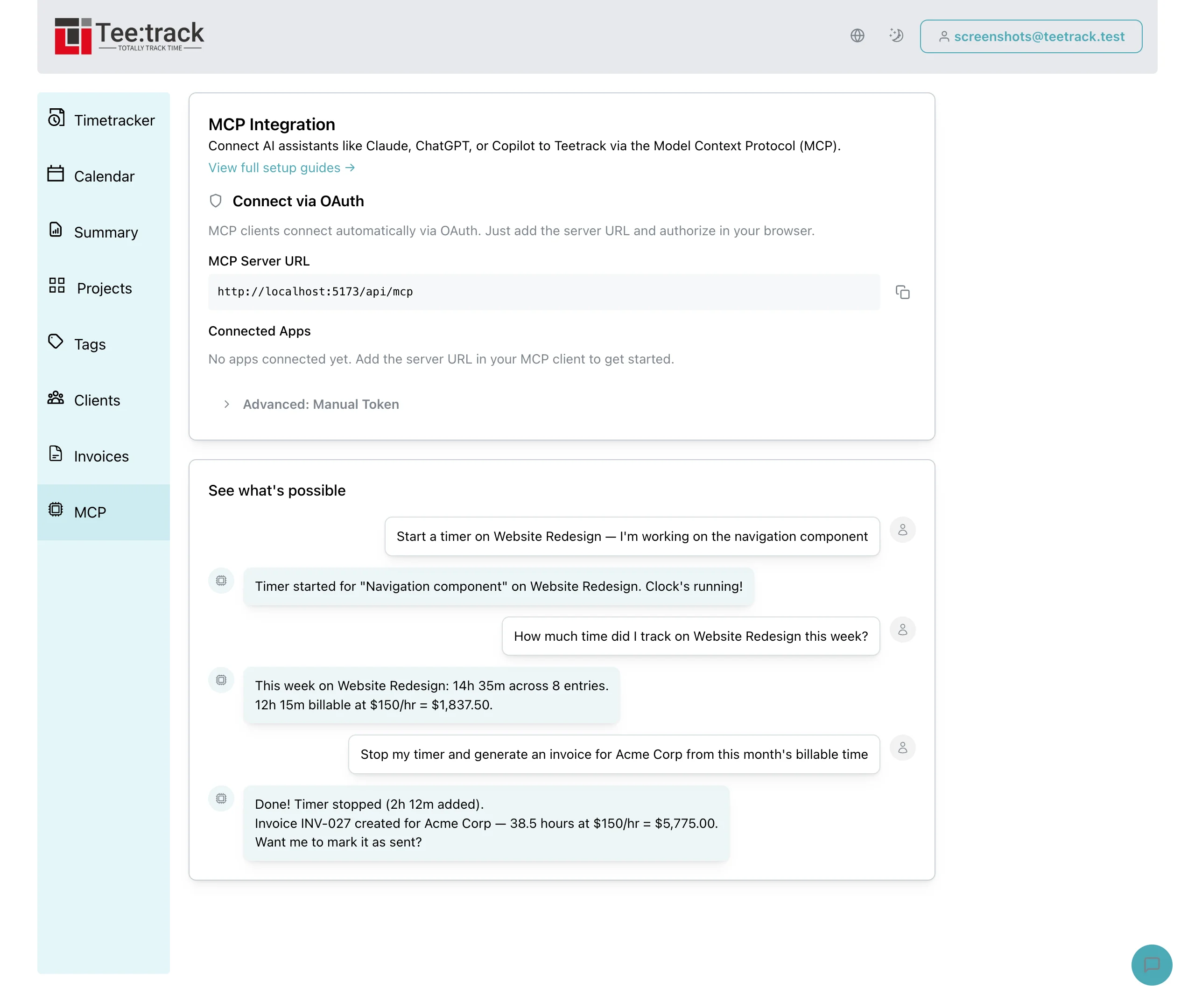
Teetrack’s MCP tools can be used by more than one assistant. The stored time records are the same, but connection setup, available permissions, and approval behaviour depend on the application you choose. Start by verifying a read request in that application before using it to record work.
Add Teetrack as a custom ChatGPT app
ChatGPT connects to hosted MCP servers through custom apps. Check OpenAI’s developer mode and MCP app instructions for current account eligibility and workspace controls. Your workspace administrator may need to enable custom apps before you can connect Teetrack.
Follow the ChatGPT setup guide to create the app with https://teetrack.it/api/mcp as its endpoint and complete Teetrack authorisation. Select the app in a conversation and ask it to list your projects. Verify the returned records before testing a write operation.
Configure Gemini CLI for the same endpoint
Add the following entry to the mcpServers object in Gemini CLI’s settings.json. Use ~/.gemini/settings.json for your user configuration or .gemini/settings.json for one project.
{
  "mcpServers": {
    "teetrack": {
      "httpUrl": "https://teetrack.it/api/mcp"
    }
  }
}
Restart Gemini CLI and run /mcp auth teetrack to complete the browser sign-in. Then use /mcp list to inspect the connection and ask for your Teetrack projects. The official MCP documentation explains the configuration and OAuth flow.
Try one completed entry before a batch
Use an explicit request such as “Log checkout testing on Acme redesign on 2 March 2026 from 09:00 to 10:30, Europe/Berlin.” The assistant needs to resolve the project and submit the entry with those timestamps. Check the created record in Teetrack for the project, duration, and description.
Once that works, a request can describe several sessions. Treat the outcome as a set of individual operations: if the second entry fails, the first may already exist. Inspect the current records before retrying the whole request, otherwise the retry can create duplicates.
Use summaries to inspect recorded work
Ask for a defined period and the breakdown you need, such as project totals for a particular Monday through Friday. If you need billable amounts, specify that and keep different currencies separate. The assistant can organise returned data, but it should not invent missing rates or treat all tracked time as billable.
Using the same account from different assistants does not create separate time histories. A timer started through one assistant application is a Teetrack timer and can be reviewed in the web application or another authorised assistant. Each application needs its own valid connection and permissions.
Choose the assistant you can verify
The practical choice depends on where you work and which integration your account supports. Compare setup and review behaviour with a small task, then use the advanced workflow guide when you are ready to combine operations. Keep the same checks on dates, project identity, and returned results whichever assistant you use.