

Calculate agency utilization and margins
By Tristan Doehl · · Updated
A busy team can still deliver work that is difficult to bill profitably. Utilization, realization, and margin describe different parts of that problem. Reading them together is useful only when their periods, costs, and definitions match.
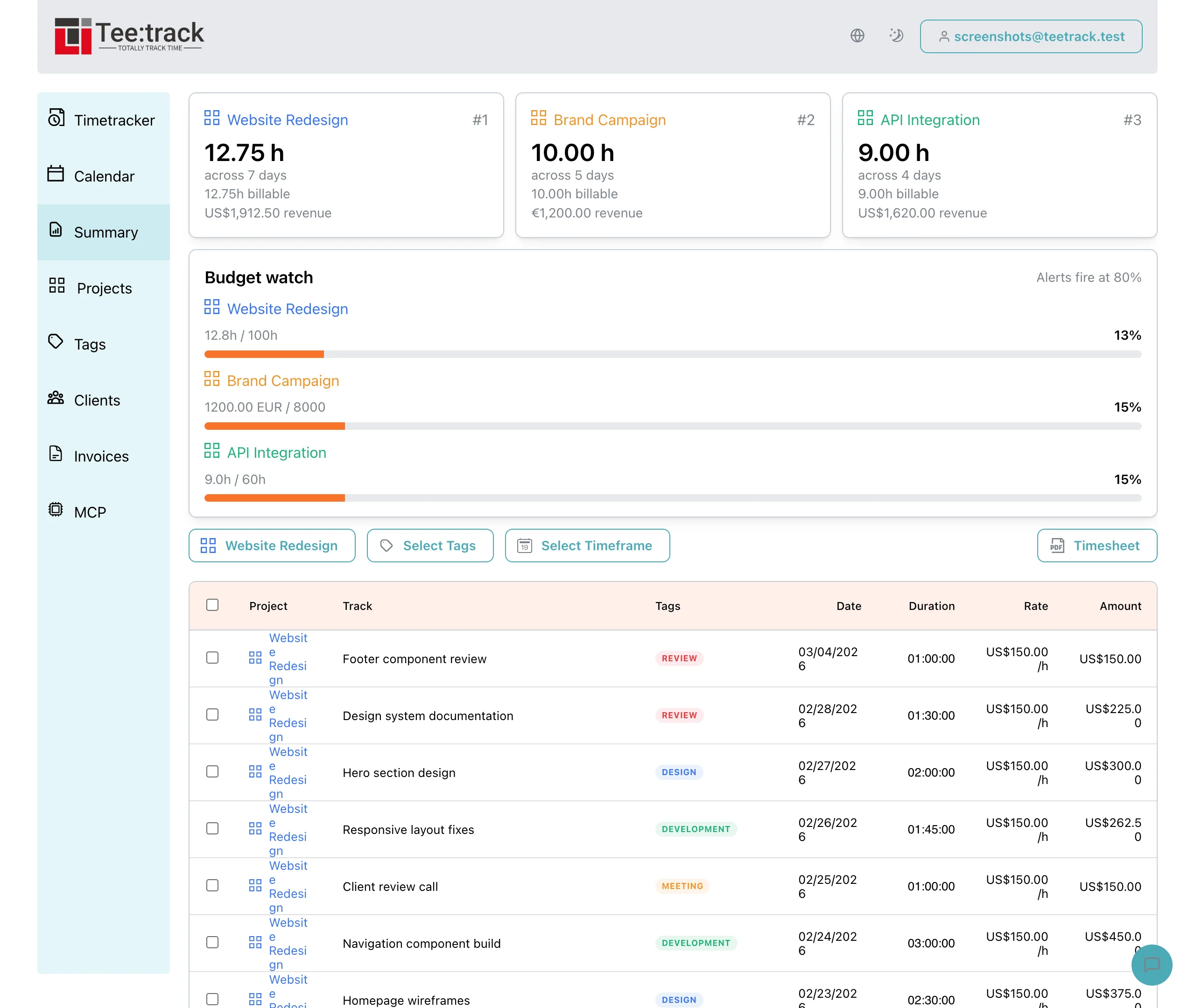
Define the records before calculating ratios
Choose the period and projects you want to review. Collect available working hours, delivery entries, the amount invoiced for that work, and the related costs. Do not mix invoices for last month’s delivery with this month’s hours simply because both appear in the same accounting export.
State whether you are examining a completed project or a reporting period. Incomplete work, advance payments, and invoices issued later can complicate a period comparison. Record those differences instead of forcing every amount into a ratio that appears precise but measures inconsistent inputs.
Calculate utilization from a stated availability basis
Use utilization = billable delivery hours ÷ available working hours × 100. In an illustrative period with 160 available hours and 120 billable delivery hours, utilization is 75%. Keep the treatment of leave and public holidays consistent in the denominator.
An internal management role may have less billable delivery than a delivery specialist. A lower percentage is therefore a reason to examine responsibilities and workload, not an automatic sign of poor performance. Missing time entries can also make the number misleading.
The utilization calculator asks for weekly billable and available hours. For a four-week example with equal weeks, enter 30 billable and 40 available hours to reproduce 75%. Use role-specific targets based on the business’s actual workload.
Compare invoiced value with potential billable value
For this guide, realization = invoiced amount ÷ potential billable amount × 100. Potential billable amount means the recorded billable hours valued at the standard rates chosen for this comparison. Use consistent currency and tax treatment on both sides.
Continue the example with 120 billable hours at €100 per hour. Potential billable value is €12,000. If the invoice for the same work is €10,800 after an agreed adjustment, realization is 90%. This describes the amount invoiced; it does not establish how much the client has paid.
Investigate whether the difference comes from a fixed fee, a discount, rework, or absorbing an overrun. In the realization calculator, enter 120 under “Hours worked”, €100 as the standard rate, and €10,800 as the actual billed amount. Here “Hours worked” means the billable delivery hours being valued, rather than all 160 available hours.
Bring in costs before discussing margin
Suppose the example’s €10,800 is the revenue attributed to the work and direct staff costs for delivery are €7,200. Gross profit is €3,600, giving a gross margin of about 33.3%. If €1,600 of operating overhead is also allocated to that work, the remaining operating profit is €2,000, or about 18.5% of revenue, before other items such as tax.
These are illustrative figures, not benchmarks. The labels matter because gross margin and an operating result after overhead answer different questions. Apply the same cost definitions when comparing projects, and avoid allocating the same overhead twice.
To reproduce a monthly version of this scenario in the agency margin calculator, enter €10,800 revenue, €7,200 under “Staff costs per month”, and €1,600 overhead. This example assumes the direct delivery costs are entirely staff costs. The calculator’s “Net profit” is revenue less those two cost inputs; it is the €2,000 operating result before tax used here. Bring the inputs from your accounting records.
Use the combination to choose an investigation
High utilization with low realization suggests that a lot of delivery effort is not reaching invoices at its assumed value. Review scope changes and adjustments. Low utilization with otherwise strong realization may point to available capacity, role responsibilities, or a gap in recording. Strong utilization and realization with a thin margin makes the rate and cost structure worth examining.
Check individual projects before changing staffing or prices. An aggregate result can hide a profitable engagement and an expensive overrun that need different responses.
Carry the definitions into the next review
Keep the period, rate basis, availability convention, and cost allocation beside the result. That allows the next review to distinguish an actual business change from a change in calculation. The agency guide connects this review to consistent recording, capacity planning, and client reporting.
Frequently asked questions
What is the utilization formula?
Divide billable delivery hours by available working hours and multiply by one hundred. Define availability consistently, including how leave and holidays are treated.
Does realization measure payments received?
In this guide it measures invoiced amount divided by potential billable amount. Collections are a separate measure and require payment records from the accounting system.
How do gross and operating margin differ?
Gross margin deducts direct delivery costs from revenue. An operating result also accounts for operating overhead. State the cost definitions and period before comparing either figure.
Is there one healthy percentage for every agency?
No. Role mix, pricing model, delivery costs, and responsibilities affect the result. Use consistent internal comparisons and investigate the work behind a change.
Can I calculate these measures from Teetrack alone?
Time records supply hours and billing context, but full agency measures also need availability, invoices, revenue, and cost records. Combine the relevant sources for the same scope and period. Teetrack's Profitability report uses two similar terms differently: its Billable % is the billable share of recorded hours rather than of available hours, and its Margin compares revenue with your target hourly rate rather than with actual costs.